Showing posts with label Vocabulary. Show all posts

Tuesday, July 28, 2009

Content and Form, Positive/Negative Space, Static and Dynamic Forms


Content the subject matter of a work of art or what the piece of art is supposed to be. If the work of art is not a representation of anything and serves no purpose other than being art, then content is simply a description of the piece of art.

Form consists of the physical characteristics of any work of art. For example, the materials used to create it, the shapes or lines seen in the piece or the finishes of the materials used or even the feelings expressed in the art.


Here are two images of a sculpture called Ridon by Ross Lovegrove. The content of this sculpture could be described as a flowing organic form inspired by a motorcycle rider. The form of the sculpture includes that it is made out of carbon fiber, has a polished natural carbon fiber finish and uses rounded shapes and lines without any breaks in the figure.
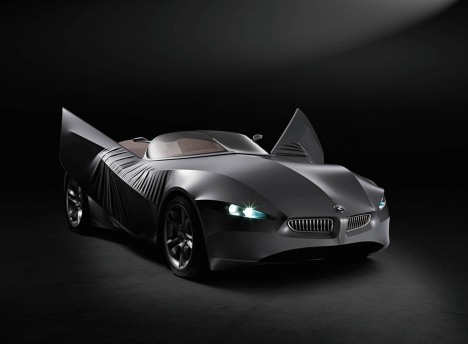


This is a photo of a concept car designed by BMW called GINA, which stands for Geometry and function in "N" Adaptations. The content of it is obviously a car. The form includes that it is made out of a dynamic articulating aluminum frame covered with a metallic looking flexible and stretchable fabric that allows the car to change shape. The flowing shapes used for body panels and the sharp angular lines where each one of these shapes meet also make up the form of this piece. Here is a link to a video that includes clips of the changing shape of this concept car:

BMW GINA


The concept of positive and negative space is the idea that shapes can be either made out of a solid material that fills a space or can be the space that is not filled with a material but defined and bordered by material.


Positive and negative space can be easily seen in this aluminum sculpture called The Big Cheese by Bruce Grey. Solid aluminum makes up the positive space and the spherical shapes representing holes in the cheese make up the negative space. You can see how the negative space/shape is defined using an absence of material, in this case aluminum.


The Pegasus wheel designed by Volvo Cars is one of my all time favorite design studies because of its overly simple design that still manages to be aesthetically appealing. In this image of it you can clearly see how the positive space of the wheel itself defines the negative shapes that fill the inside of the wheel.

In sculpture, static form means that the piece does not move or change form, where as dynamic form means that the work can either move or change shape or both. The GINA concept car from BMW seen above is a great example of a design piece with dynamic form.


Le Penseur, translated to English as The Thinker, by Auguste Rodin made out of bronze and marble is a good example of a static sculpture.


Since the essence of a dynamic work of art is movement, I decided that a static photograph simply wouldn't cut it, so here is a link to a video of a "working" sculpture used by Honda as a car commercial:

Honda Accord Commercial

Monday, July 27, 2009

Grid and Matrix

The grid pattern is created by a series of intersecting lines that create a checkerboard pattern. Grids divides a 2D surface into a series of continuous cells that can then be individuated or used to form a framework for patterning.


Ex Arsenale at Maddalena by Stefano Boeri Achitetti


Ladderstile House by ThreeFoldArchitects

A matrix is a three dimmensional grid pattern.


Quoted from http://www.flickr.com/photos/14779500@N07/2431442165

Repetition & Rhythm

Repetition, the recurrent use of a visual elements in one composition, is used frequently and to great effect in design. Reoccurring forms create a pattern or visual steam of connection in each of these compositions, forming a type of rhythm in each work.


Repetition
by Ingrid Siliakus, 2004

Quoted from http://bit.ly/yqC7I


Repetition can be quite successfully used to create a sense of rhythm in design.


Bodegas Protos winery by Rogers Stirk Harbour + Partners

House in Matsuyama by Suppose Design Office

Pop Art

Pop Art is a movement that originated in Britain and the United States during the 1950's and 60's, partially due to the boom of post-World War II consumerism. As a reaction to more traditional art, pop art poses the notion that mass-produced visuals can be considered 'fine art' as well. Pop art borrows a lot of ideas, themes, and methods from advertising, comics, consumer products, and everyday objects that might otherwise have been considered 'boring.' Pop art takes these objects and materials out of their places in everyday life and isolates them, often times causing viewers to contemplate and/or appreciate them differently (this is an extension of Dadaism). Because of this, pop art is about the attitudes/connotations of a work of art, rather than to the actual art itself.


Valerie Hegarty, American

Unearthed, 2007

Niagara Falls, 2007


Marisol Escobar, 1930, French

Women and Dog, 1964

Magrite III, 1998


Eduardo Paolozzi, 1924-2005, Scottish

Michelangelo's 'David', 1987

Dress

Newton, 1995


Robert Rauschenberg, 1925-2008, American

Monogram, 1959

First Landing Jump, 1961

BMW 635 CSi, 1986


Claes Oldenburg, 1929, Swedish/American

Soft Light Switches, 1969

Giant Soft Drum Set, 1967

Dropped Cone, 2001

Sunday, July 26, 2009

line, balance, scale, contrast

line: an infinitely-extending one-dimensional figure that has no curvature


Litte Red Riding Hood by Gustave Dore.
Gustave Doré here illustrates the tales of Baron von Münchhausen in line art.


Balance: a state of equilibrium or equipoise; equal distribution of weight, amount, etc.
Symmetrical balance

Taj Mahal is a mausoleum located in Agra, India, built by Mughal Emperor Shah Jahan in memory of his favorite wife, Mumtaz Mahal.


Asymmetrical balance

Brikabrak by Steven Michael


Scale : a balance or any of various other instruments or devices for weighing

Small:


Monumental:


Contrast : to compare in order to show unlikeness or differences


-Arushi

Unity

Grouping to create unity:

Nest by Louise Bourgeois

Containment to create unity:

New England Digs by Mark Dion

Proximity to create unity:

Essex by John Chamberlain


Repetition to create unity:

"Kind mit Pudeln (Baby with Poodles)" by Katharina Fritsch

Continuity to create unity:

Pluto and Proserpina by Gian Lorenzo Bernini

Closure to create unity:

Saddle by Janine Antoni


-Nicole

Grid and Matrix

A GRID is a network of intersecting horizontal and vertical lines. A MATRIX is a three- dimensional grid, or the point from which something takes form. When used in three-dimensional art, grids and matrices often create a sense of order and unity.


Teak Grid wall sculpture, by Le Roy Setziol


Atomic full of love, full of wonder, by Nike Savvas


BMW's kinetic sculpture, in which a matrix of balls suspended on wire can be moved in patterns until they come to rest in the shape of new and classic BMW cars.

Repetition and Rhythm

REPETITION:Repeated visual elements such as color, texture, line and shape create strong visual connections that serve as a unifying force within a composition. When these elements are arranged into a deliberate pattern, a sense of RHYTHM is created that guides the eye through the piece, making something inherently stationary appear dynamic.

The Parthenon was constructed in Athens in the 5th century B.C. It is made of marble and limestone and was originally used as a temple for the goddess Athena.


The Hotel Uzbekistan, in Tashkent, Uzbekistan, is an example of Soviet architecture.


The Star, by American Sculptor Alexander Calder in 1960, is made of polychrome sheet metal and steel wire.

minimalism

"What you see is what you get"
Frank Stella, minimalist painter

A 20th century art movement and style that rejects the idea that art is a form of self expression, social comment, or a reflection on politics, history, or religion. This is accomplished by reducing the use of color, shape, line, and texture in a work of art. Color is used not to set a mood, but rather to delineate space. Often industrials material are used to further distance the artist from the piece. Minimalism emphasizes creating a presence, one in which the work is appreciated simply for what it was.

Eva Hesse 1936-1970
German born American artist
Image and video hosting by TinyPic
Repetition Nineteen III 1968
fiberglass and polyester resin


Image and video hosting by TinyPic
Contingent 1969
cheesecloth, latex, and fiberglass


She was said to have done the most to humanize minimalism. She moved away from the rigid, "male" style toward a more feminine and inward style. She did not want her work to be categorized as "women's art." She felt that the "best way to beat discrimination in art was(sic) art."


Richard Serra (1939-2009)
American born sculptor and video artist
Image and video hosting by TinyPic
Fulcrum 1987
five plates of Cor-ten steel,intentionally rusted


Image and video hosting by TinyPic
Band
weatherproofed steel

He is most known for the size and weight of his works, often using large pieces of metal. Some of his other well known work include his castings of lead thrown against his studio walls. The emphasis being on the impact of the lead as it hit.


Sol LeWhitt (1928-2007)
American Artist
Image and video hosting by TinyPic
Incomplete Open Cube 1976
painted aluminum

Image and video hosting by TinyPic
Cubic Modular Wall Structure, Black 1966
painted wood


He preferred his sculptures to be called "structures.". He is equally known for his drawing, printwork, and paintings.


Lynda Benglis (1941- )
American artist

Image and video hosting by TinyPic
Wing 1970 cast aluminum

Image and video hosting by TinyPic
latex floor painting 1970


Felt women were underrepresented in male dominated art scene. She uses a variety of materials including, wax, gold leaf, and latex. Her other work is often a commentary on the oppression of women in society.